


ESG Social Risk Management and Strategic Marketing Seminar Successfully Held in Hong Kong
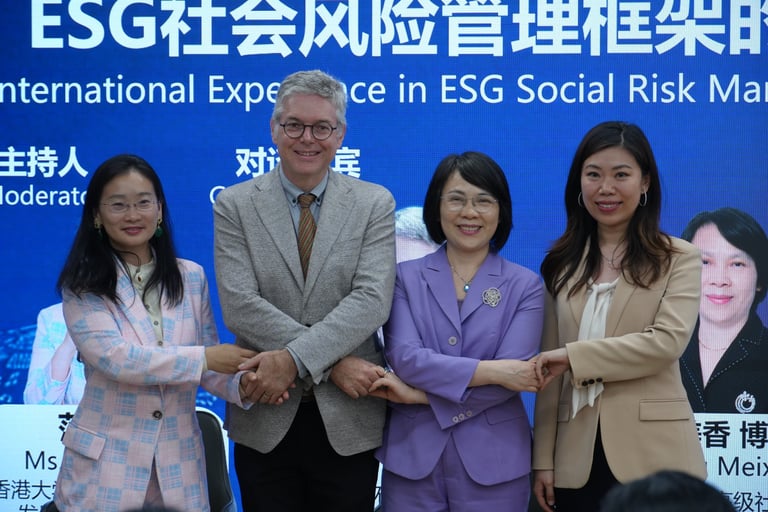
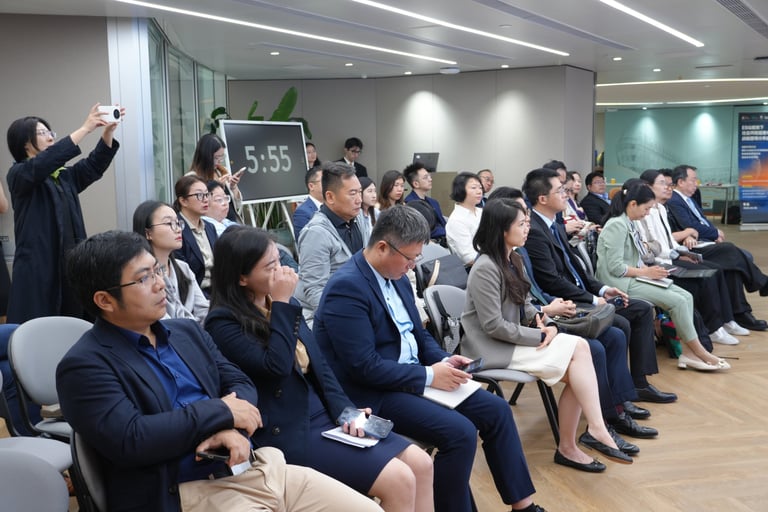
On 8 April 2026, the ESG Social Risk Management and Strategic Marketing Seminar was successfully held at HKU iCube in Central, Hong Kong. The event was hosted by the Global Society and Sustainability Lab, HKU Social Sciences, co-organized by EsgiLink Risk Management & Investing Co., the Hong Kong BeiNeng International Public Welfare Research Institute, and Beijing BeiNeng Management Consulting Co., with support from the Beijing Yicheng Cooperation and Development Foundation, China, and the Association for International Economic and Technical Cooperation.
4/16/20265 min read
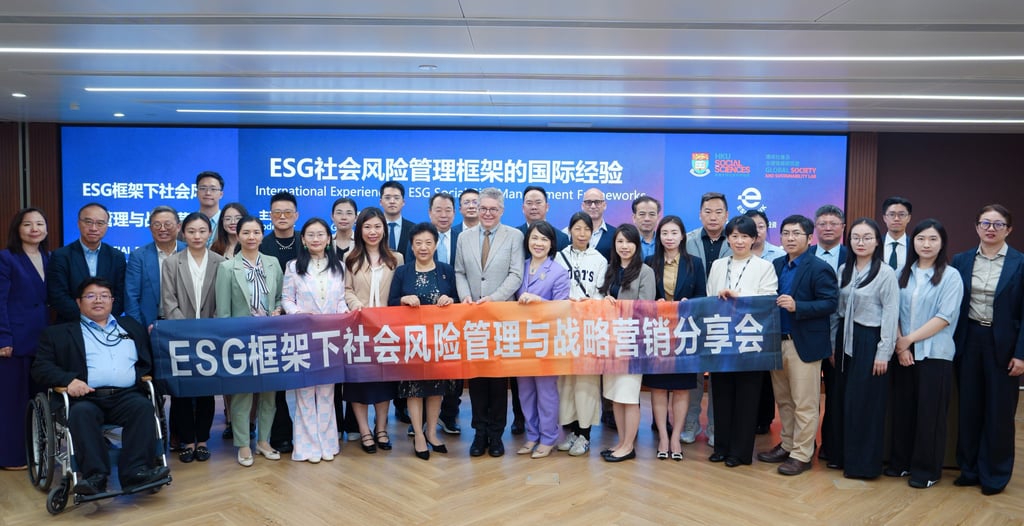
On 8 April 2026, the ESG Social Risk Management and Strategic Marketing Seminar was successfully held at HKU iCube in Central, Hong Kong. The event was hosted by the Global Society and Sustainability Lab, HKU Social Sciences, co-organized by EsgiLink Risk Management & Investing Co., the Hong Kong BeiNeng International Public Welfare Research Institute, and Beijing BeiNeng Management Consulting Co., with support from the Beijing Yicheng Cooperation and Development Foundation, China, and the Association for International Economic and Technical Cooperation. Experts and practitioners from academia, financial institutions, the corporate sector, and the public welfare field gathered to engage in in-depth discussions on social risk management, strategic marketing, and pathways toward sustainable development in the context of globalization.
The session focused on the “Social” dimension of the ESG framework, with particular attention to how Chinese enterprises “going global” can align compliance, local integration, and value creation within increasingly complex and dynamic social environments.
From “Compliance Response” to “Social Embeddedness”: Redefining Social Risk
Traditionally, social risks in corporate governance have been treated as external variables to be mitigated, such as public opinion crises, labor issues, or community conflicts. However, discussions at the session pointed to a deeper shift: social risk is not merely a category of risk, but a key indicator of whether a company can genuinely enter and sustain itself within local societies.
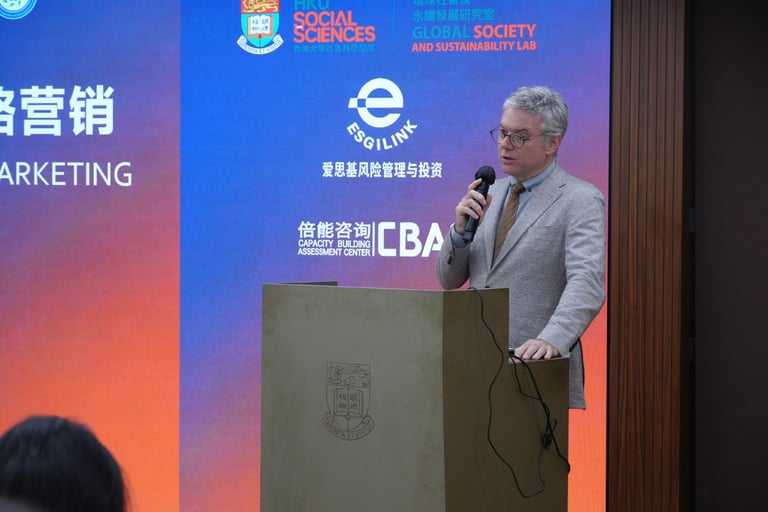
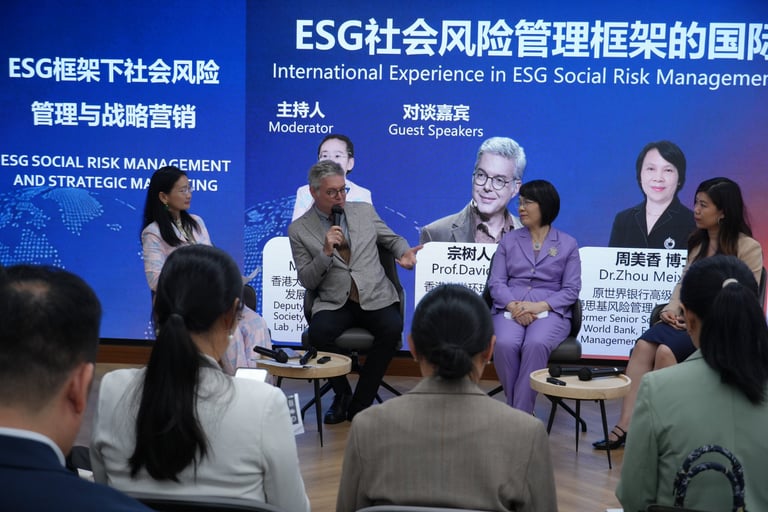
In his opening remarks, Prof. David A. Palmer, Director of the Global Society and Sustainability Lab at HKU, drew on his long-term anthropological research and fieldwork along the Belt and Road Initiative. He noted that many challenges faced by companies overseas stem from disconnections or misalignments with local social structures. The “S” in ESG, he emphasized, lies not in formal compliance, but in the ability of enterprises to understand and integrate into host societies, building trust and meaningful engagement within real social networks.
The “S” in ESG: From Responsibility to Strategic Core
Participants widely agreed that the “Social” dimension of ESG has evolved from an extension of corporate social responsibility (CSR) into a critical factor shaping long-term competitiveness and project sustainability.
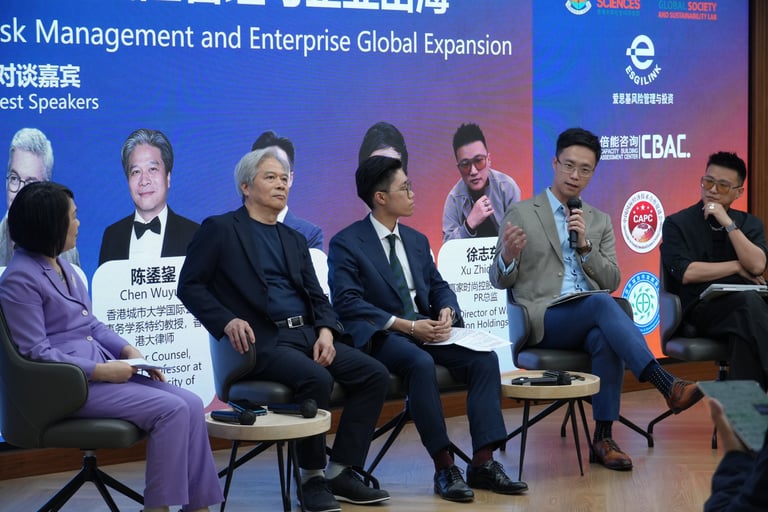
During the fireside discussion, Prof. Palmer further stressed that companies must move beyond reactive responses to social issues and develop a more reflective and forward-looking capacity—one that recognizes how corporate actions affect human well-being, social trust, and systems of meaning. This capacity, he noted, is essential not only to corporate ethics but also to the long-term vitality of brands.
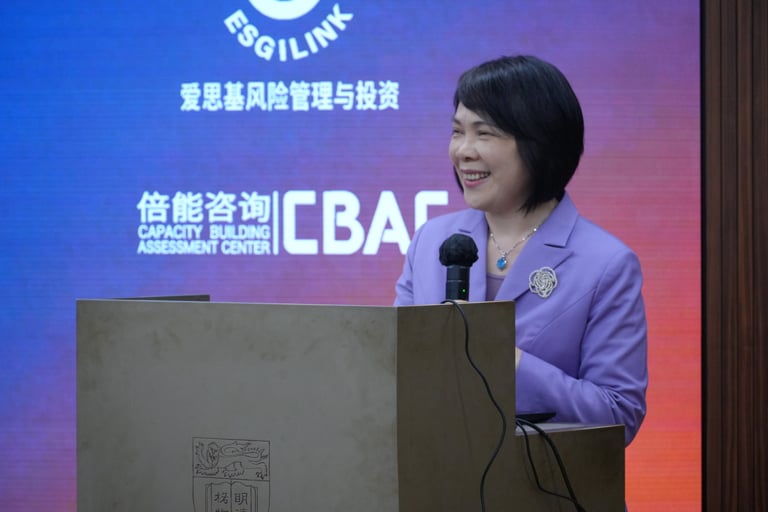
Dr. Zhou Meixiang, former Senior Social Specialist at the World Bank and Founder of EsgiLink Risk Management & Investing Co., highlighted that in culturally diverse regions such as Southeast Asia, neglecting cultural differences, social sentiments, and local value systems can significantly increase reputational and operational risks. In contrast, companies that cultivate cross-cultural empathy and understanding are better positioned for sustainable growth.
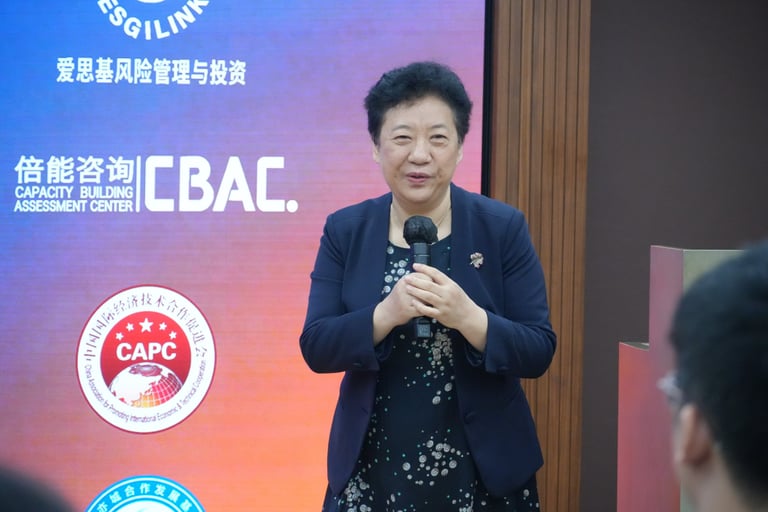
Ms. Zhang Jufang, an expert in sustainable development in the non-profit sector and Founder of both Beijing BeiNeng Management Consulting Co. and the Hong Kong BeiNeng International Public Welfare Research Institute, emphasized the importance of communication. In increasingly complex public opinion environments, she noted, companies must establish sustained communication mechanisms and trust foundations. Social risks often arise from communication breakdowns and cognitive gaps; improving communication quality is therefore a key component of risk governance.
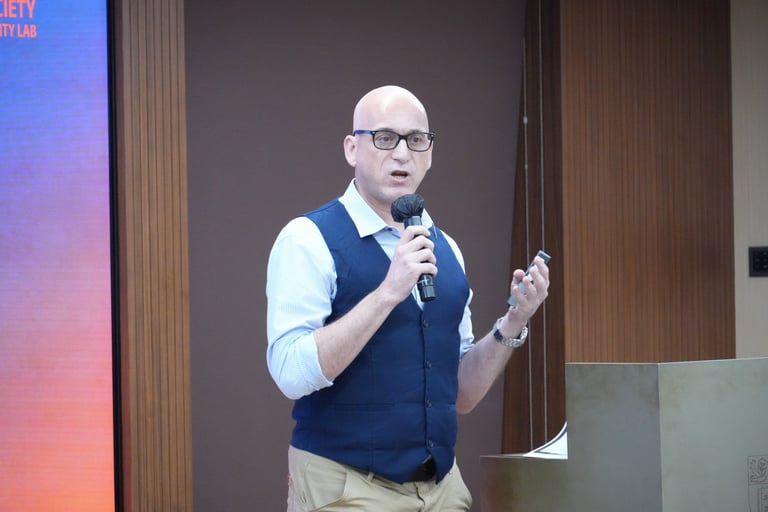
In addition, Dr. Joseba Estevez, Associate Director of the Global Society and Sustainability Lab at HKU, drew on his long-term fieldwork in Southeast Asia to highlight the importance of locality. While large-scale projects are often negotiated at the macro level, their tensions and frictions are most acutely experienced at the community level. He argued that companies should establish long-term local engagement and participation mechanisms, enhancing transparency, promoting benefit-sharing, and understanding community differences in order to reduce conflict at its source and foster more inclusive and sustainable forms of social integration.
A New Direction in Strategic Marketing: From Brand Communication to Social Relationship Building
At the level of marketing, the discussions revealed a clear shift: companies are moving from traditional models centered on product promotion and information dissemination toward strategies grounded in social relationship building and public engagement. Within the ESG framework, brands are no longer merely tools of communication but expressions of corporate action in society. Corporate practices in community engagement, cultural adaptation, social equity, and public issues are increasingly integral to brand identity.
Correspondingly, marketing logic is evolving—from one-way messaging to multi-stakeholder interaction, and from short-term visibility to the accumulation of long-term trust. When companies establish genuine and sustained relationships across cultural contexts, marketing becomes not just expression but a process of value co-creation embedded within social networks. This transformation not only strengthens public trust but also reduces misunderstandings and conflicts in cross-cultural environments, thereby enhancing long-term competitiveness.
Building Integrated Pathways: From Internal Governance to External Collaboration
From a practical perspective, speakers emphasized the need for integrated mechanisms across departments and organizational levels to embed social risk management throughout corporate operations. Internally, this involves strengthening governance structures and incorporating ESG indicators into core decision-making processes. Externally, it requires closer collaboration with communities, governments, and non-profit organizations to build multi-stakeholder governance networks.
Participants highlighted that in the process of “going global,” cultural adaptation, community engagement, and stakeholder participation have become indispensable. Whether in infrastructure development, industrial investment, or supply chain expansion, social risks are often decisive factors affecting project implementation and success.

Looking Ahead: Toward a Social Value-Oriented Paradigm of Corporate Development
In conclusion, the session underscored that the ESG framework offers companies a critical opportunity to rethink their roles. In particular, within the “Social” dimension, enterprises are evolving from purely economic actors into key participants in broader social ecosystems.
As the world advances toward sustainable development, the ability to transform social risks into strategic resources—and compliance requirements into developmental capabilities—will be central to long-term corporate success. This sharing session not only deepened the understanding of ESG’s social dimension but also provided valuable insights for enterprises navigating the next phase of globalization.
Related reports:
www.gongyishibao.com/html/gongyizixun/2026/04/32847.html
https://finance.ifeng.com/c/8sUC2iQVyc0
http://industry.caijing.com.cn/20260421/5154763.shtml
https://www.jiemian.com/article/14281671.html
David A. Palmer
SITE MAP
Bridging research and community through spiritual growth, dialogue, and social engagement.
Home
Copyright © 2025 David A. Palmer. All Rights Reserved.
CONTACT
About
Publications
Resources
Team & Students